Sunday, 28 October 2007

Mid-Semester Break!

After “middling” through mid-terms, it was finally time for the much-anticipated mid-semester break.

Our itinerary read like this:

1) Depart Friday October 19 from London King’s Cross train station for York at 8:30 in the morning. Arrive around 10:30 AM.

2) After spending the day in York, depart from the city’s train station at 7:30 PM for Edinburgh. Arrive around 10 PM.

3) Spend a day and a half in Edinburgh. (Saturday October 20 and part of Sunday October 21) Depart by train for Newcastle at 11:50 AM.

4) In Newcastle, board a ferry to Amsterdam. The ferry departed at 5:30 PM and arrived at approximately 9 AM the next day.

5) Spend nearly three days in Amsterdam. (October 22-October 24) Get back on the ferry bound for Newcastle at 5:30 PM and arrive at 9:30 AM the next day.

6) Spend roughly three hours in Newcastle before getting on a train back to King’s Cross at 2:05. Arrive back in London at 5:30.

In stark contrast to most of our Syracuse University London peers, we spent several days in Great Britain. We weren’t quite sure what other opportunity we would have to visit northern British cities, and since we were living in England, it seemed foolish to spend most of our travel budget on international flights.

You’ll also notice that we didn’t fly at all. Four trains and two ferry rides let us skip the lost time of waiting in line to be checked by airport security or riding on hour-long shuttles just to get to the airport. All of the train stations we visited were right in the middle of the cities, within easy walking distance of the important sights.

But enough introduction. On to the actual trip.

Day 1: York

10/19/07

I’m actually writing the sections on York and Edinburg on the train from Edinburgh to Newcastle at about 12:45 PM on Sunday, October 21 with the Scottish lowlands swooping by out the window. There certainly is no dearth of cows or sheep roaming sloping fields here, and those grey Scottish skies you always hear about are real. But, on to recalling York.

I must have been excited about the trip, because I didn’t have much trouble getting out of bed at 6 in the morning. Pretty impressive, given that I had been up until 1 the night before after a foolish decision to start laundry at 11 PM so I wouldn’t have to deal with it on returning from the break.

Regardless, our train left Kings Cross (of Harry Potter fame) at 8:30, and I had to leave plenty of time to get ready and catch the tube to the station since I had no intention of missing the train.

That train made me understand why I’ve heard people rave about European railroads. We used an electric engine the whole way to York, and the ride was the smoothest I’ve ever felt. We also traveled staggeringly fast. I didn’t pack my radar gun, so I can’t give you an exact number, but we would have made an Amtrak train look like a little old white-haired lady doing 45 on I-81.

The other interesting thing about the train was that it had most of its seats facing each other across tables. There were still some traditional seats facing the backs of other seats, but most of the chairs had access to a nice table on which to eat, play a game, read or write. If I had brought my laptop and was willing to pay for it, I could even use the train’s wireless internet.

The “Fred Seltzer” section of the trip didn’t end when we pulled into York station. I had forgotten it until we disembarked, but the city is home to the United Kingdom’s National Railway Museum. It was the first place we went. I can’t really tell you how many trains and exhibits there were, but let’s just say it calls itself the largest railway museum in the world for a reason. It was a real blast walking through the various displays, luxury cars and locomotives housed in the numerous buildings and roundhouse.

Popular themes in British railroading seem to be the royalty’s use of the rail, and the introduction of vacuum-operated brakes on all cars. Since the royal family used personal rail cars for travel for over 150 years there were more posh examples of the former than I can remember. The latter insures that a car’s brakes engage if it’s to the locomotive is severed, insuring cars don’t roll back down hills while increasing the overall stopping power of the train.

The museum, like all good national museums in Britain, was free, so we stayed a while. Still, after about two hours I was starting to have flashbacks of the countless hours spent looking at trains from my youth, so it was time to go. I did leave with a pang of guilt that certain enthusiasts at home didn’t get to see all of the trains on display, though.

Aside from the fascinating railway museum, the really interesting thing about York is that its downtown is surrounded by sections of stone walls that date back to the medieval period. You can still walk around the city on top of those walls, which is a great way to check out the city.

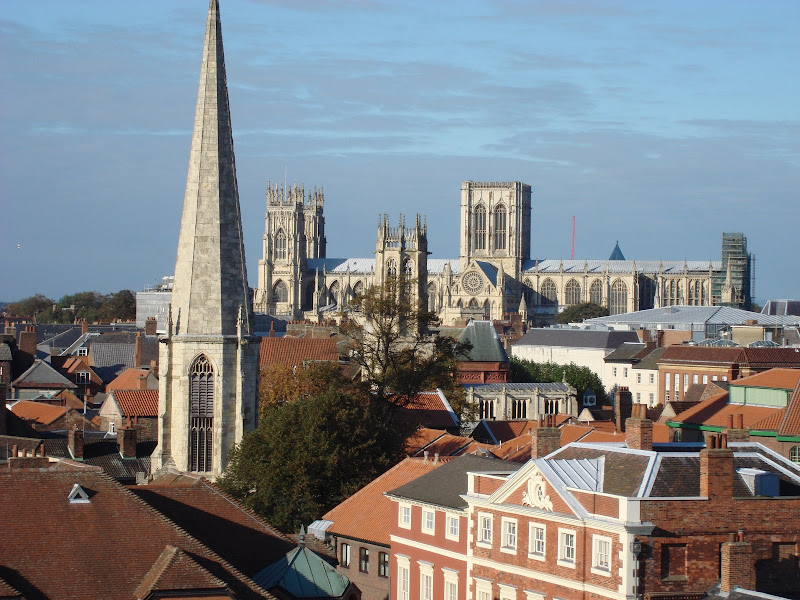
But Deb and I had to grab a bite to eat after the railroad museum. Finding ourselves within the walls already, we put off backtracking to walk on them and made for York Minster, Britain’s oldest gothic cathedral. As Let’s Go Europe tells me, the Minster contains roughly half the surviving stained glass surviving from the medieval period in Britain.

York Minster is just massive, towering over the northern part of the city. It is also quite pretty from the outside. While you can’t call its stone ornamentation simple, I preferred it to the gaudy excess of ornamentation adorning Westminster Abbey.

We didn’t go into the cathedral right away because it would have cost money, and we knew we could get free access later in the evening by attending the evensong service. When we did enter, the inside was just as nice as the outside. All that aged stained glass was very impressive. Since it was so old, each different color needed its own individual pane of glass, making it much more intricate than newer windows.

The roof was whitewashed, but that didn’t take away from what was a massive enclosed space. It’s tough to describe so I’ll simply lament the fact that I couldn’t take pictures of the enormous interior. It’s safe to say that even if I could, those pictures would not have done it justice.

The Evensong service itself was a real treat. The Minster’s boy’s, girl’s and men’s choirs sang at a service dedicated to those who gave a lot of money to the Minster. The choir’s voices were superb, and they sang some complex numbers with difficult changes in tempo and pitch. The girls (and maybe the boys) sounded like full-grown women, and their voices combined to fill the humongous Minster without blowing you out of your seat.

The crowd at the Minster for this service is worth writing a bit about, if for no other reason than because I am accurate in calling it a crowd. The middle of the church was reserved for the regular paying patrons, and it was full – on a Friday night. Even the seats along the edges, which were opened to us common folk, were mostly taken. I don’t know if the particular occasion was special or whether every Evensong on Friday is so popular, but I was amazed.

They were also notable because of their age and dress. The median age had to be 75 – it was like 5:15 mass at St. Pat’s, only with fewer 25-45 year-olds. I saw all of one child. Perhaps as a consequence of their ages, they were all very well dressed. I was pretty trashy in my jeans and polo shirt, though no one made me feel conspicuous.

We did do a few things between first walking by the church and going to the Evensong four hours later. First we walked down a touristy brick lane and through a “European Food Festival.” Then we stumbled onto some Native American performers.

Now, I’m on an extended trip to London from America. From London, I’ve taken two trips where I’ve stayed overnight: This mid-semester break and the trip to Stockholm. In all of these extended trips, London, mid-semester break and Stockholm, I’ve seen Native American performers in the street. It is the strangest thing, and I have no idea what to make of it.

After shaking our heads about the Native Americans in Europe, Deb and I headed to Clifford’s Tower. Built sometime in the early 00’s – and I mean 1,000’s, not 2,000’s. It fits the castle model we saw in Cambridge, where they threw a lot of dirt and debris in one spot to make a big hill on which they could build a tower for defensive purposes. Unlike Cambridge, the tower in York is still standing. It is also a lot bigger than the tower in Cambridge would have been.

It was, shockingly, a place of historical bloodshed. At one particular flare of anti-Semitism, all of York’s Jews had to take refuge in Clifford’s Tower. Trapped inside, they had the choice of being killed by the angry crowd or starving to death. They took the third option, and committed suicide. Grim.

Now, you can climb to the top of the tower and get a good view of the city. I was wishing my camera had a panoramic function while I walked around the top. The Minster, medieval wall, Ferris wheel at the train museum, and NestlĂ©’s Headquarters (Yes, the candy company), which is apparently in York, were all visible.

After that, we walked around the medieval wall for a bit before heading to Evensong and back to the train station. At the station, I tried to throw away the remains of our fish & chips dinner, to find no trash cans in the entire station! No wonder its bathrooms were filled with rubbish. I know security is a concern, but having a total of zero trash cans in a train station is ridiculous.

Our train to Edinburgh was a Virgin train, the only Virgin train we had on the whole trip. All of the others were GNER. Unfortunately, this train seemed to have its seats lifted directly from Virgin’s trans-Atlantic flights, only without the nifty television screens in the back of each seat. Supplementing train seats with airline seats is not a good thing, and I was having flashbacks of my leg cramps on the flight to Heathrow.

It also arrived 45 minutes late to Edinburgh station. But it had been a big day on little sleep, and I didn’t mind a little extra time to snooze on the train.


Days 2 & 3: Edinburgh

10/20/07 – 10/21/07


If Stockholm is the prettiest city I’ve ever seen, Edinburgh is the most majestic. Built around a combination of volcanic and glacial rock formations, there are staggering structures perched upon sharp hills and crops of rock.

Adding to the charm is the fact that many buildings are very old, since Edinburgh didn’t receive the decimating bombings of the World Wars like London. Either due to the region’s particular weathering or because of the type of rock used in the buildings, the stone has mostly turned black, giving the city a very draconian feel.

The most obvious example of this black stone is Edinburg Castle, and I got a great look at it as we were about to fall in the door of our hostel on Friday night at 11:30. Perched above the whole city on a thrusting piece of rock, illuminated by an eerie white light, sat the incomparable structure. It’s just breathtaking.

It also looked just as good against the clear blue sky of the next morning. As we walked down the main street, or “Royal Mile” of Edinburgh’s old town, it became obvious that the castle is accompanied by many similar black and majestic structures.

We walked east to pick up a path which we could hike to the top of a large volcanic rock formation, Arthur’s Seat, so we could get a good view of the city. Along the way, we ran into a few things.

First there was a bagpiper wearing a kilt on the Royal Mile. There were actually bagpipers playing away and adding to the atmosphere almost everywhere we went in Edinburgh. It ended up making the entire stay feel like something out of a movie.

Next, we stopped at Saint Giles Cathedral, which is, like all other old Edinburgh buildings, made of black stone. It is also exceedingly beautiful inside. The alter is in the middle, and all seats face inward. There is an old painting of the crest of the union of Scotland and England, with Scotland’s unicorn and England’s lion supporting a shield.

Most impressive is the new pipe organ, installed in 1992. Somehow it manages to be modern while fitting in with the church’s gothic style. Its proud maroon paint and simple, clean triangular shapes pay tribute to gothic arches while not picking up their extreme complexity. Sadly I didn’t get to find out if the organ’s sound matched its beauty.

Also worth mentioning is St. Giles Cathedral’s steeple. Well, steeple might not be the right word. Four stone arches join at one point on the roof, making for a very pretty top.

At the end off the Royal Mile was the Queen’s official residence in Scotland along with the new, radically designed Scottish Parliament building. The Scottish Parliament was recently reformed, and it’s building sure looks new. It doesn’t get stuck up in the self-important classical style of American government buildings. It just…flows. Make what you will of it from the pictures.

We spent the next two hours hiking to the top of Arthur’s Seat. While my pictures from the top are quite nice, they still fail to capture the wonders of the view. The camera just caught the city and landscape fading into fog, while missing the barely visible presence of the Scottish Sea to the East.

Next we hiked back down from the seat and back up the Royal Mile, stopping at numerous souvenir shops. Not being a sucker for tourist trap gift shops, I was surprised to find myself interested in the woolen tartan scarves, kilts, highland cow dolls, and assorted “Nessie” paraphernalia. It was a lot quirkier than the screen printed T-shirts I pass every day on Oxford Street.

After trekking back up the Royal Mile we stopped staring at Edinburgh Castle and went in. It’s one of the few places I can justify spending £11.25 for admission. In addition to more breathtaking views of the city, there were national museums within the massive walls. The Scottish Army Museum, Scottish Crown Jewels, Scottish Prisoners of War Museum and Scottish War Memorial were up there. We even saw a wedding party leaving the church in the castle. All the men were wearing kilts.

The Scottish Army Museum taught me that the Scots have plenty of pride in their national identity. Some of them were still wearing tartan kilts on the battlefield until 1940!

Although it would have been interesting, we skipped the Scottish Whiskey Experience outside the castle walls. It was plenty expensive for a Chocolate World-esque tour of Scotch. We did browse the gift shop, where I learned that there are more classifications of Scotch than you can ever remember.

That day was also Deb’s birthday, so I took her out to dinner at a pub where we could watch the Rugby World Cup final between England and South Africa. Sadly England lost, but I think we managed to enjoy dinner nonetheless. After the waiter assured me it had no beef, I tried “haggis, tatties and neeps.” (Haggis, potatoes and turnips) It wasn’t what I expected, but it was still surprisingly good, considering it was lamb lung/stomach. Check ricksfoodcritique.blogspot.com for my full review of the traditional Scottish meal.

With a night of sleep and a stroll around new town, it was time to pull out of the train station and leave the wondrous city behind and head to Newcastle. Due to rail work, our train went west to go east, and we stopped in Carlisle England. Now, I didn’t think I was going to make it to the namesake of the home town, and it was pretty exciting when we pulled into the station. I didn’t get to disembark to see much, but I can at least say I’ve been there – a bonus on the trip.

The Ferry: To and from Amsterdam

10/21/07 & 10/24/07


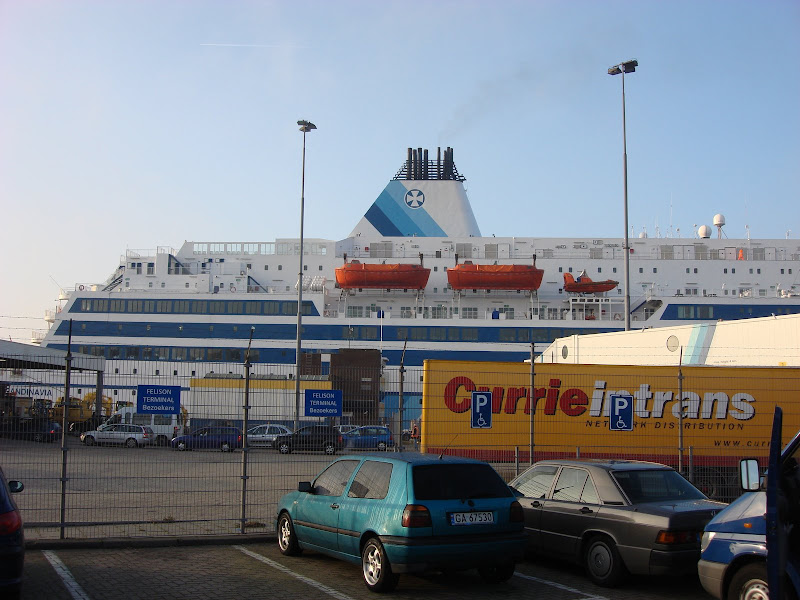
The ferry between Newcastle and Amsterdam was the object of a lot of excitement for me. I think it was a pretty good deal for a combination of hotel room and international travel. It was also the longest I’d ever been on a boat, and it was certainly the biggest ship I’ve ever boarded.

Ferry is actually not a very good description. The King of Scandinavia has four gift shops, three restaurants, three bars, a casino, a coffee shop, a kid’s playroom and a cinema. With 11 decks, it can hold a lot of cabins and swallows your car if you want to take that overseas, too.

The trip took about fifteen hours and we got our own two bunk cabin with a private bathroom. After two nights sharing a hostel bedroom with eight strangers who walked in at odd hours of the night, we were ready for some peaceful sleep. Although there was plenty to do on the boat, it was obscenely expensive. Dinner would have cost at least twenty Euros per person. We’d brought some food, expecting that to be the case, and just retired happily to sleep after exploring the boat for awhile.

Of course, we watched our departure first. The DFDS seaways dock is down the river from the city center, but there were plenty of interesting things to watch while we pulled out. People waved to us from the shore, I watched the lighthouses approach and fade away and there were some other boats on the water to look at for awhile. I even spent some time in one of the lobbies looking at the GPS map showing where we were after it got too dark to see anything from the deck.

The ferry also didn’t dock in Amsterdam. Instead, it dropped us off in IJmuiden, about 30 minutes from Amsterdam by bus. DFDS Seaways ran the busses for us, and we got to see some of the Netherlands’ famous windmills on the drive.

The trip back from Amsterdam ended up being pretty similar, except we were even more tired, and consequently slept even more. I think the ferry was the perfect chance to rest up between sightseeing, though.

Days 4-6: Amsterdam

10/22/07 – 10/24/07

For a city in a country that’s almost entirely below sea level, it sure can be expensive to get a drink in Amsterdam.

Two Euros will buy you a small bottle of water good for about three mouthfuls. Soda is about the same. The cheapest thing to drink is beer, and there are a few reasons that might be a good idea.

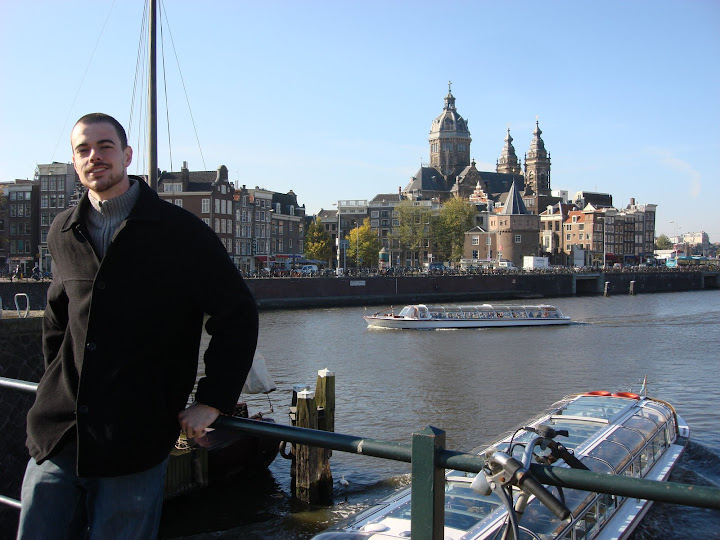
First, the city might be the most confusing I’ve ever tried to navigate. Forget London’s changing street names, Syracuse’s odd one-way streets and Stockholm’s tangled web of islands. Amsterdam’s concentric canals left me digging for my map an awful lot, taking the long (a.k.a. lost) way even more. If I’d been drinking beer all day, I would have had an excuse for being lost while also have been unable to feel my aching legs.

Beer might also have allowed me to overlook some of the city’s rougher aspects. It has its nice parts, but Amsterdam takes pride in its vices. Perhaps as a result, there are a lot of trashy looking tourists around, most of who are American. There is also an inordinate amount of graffiti, although I suppose you could chalk that up to a liberal interpretation of art.

Two of the most famous brands of beer in the world are also from Amsterdam. Well, what might be the most famous brand and a pretty well-known brand, anyway. The well-known brand is Amstel, which gets its name from the former river (and current canal) that gives Amsterdam its name. The famous brand is, of course the advertising goliath Heineken.

But let me be clear about this: While there were a lot of things about Amsterdam I didn’t like, there were also a lot of things that I did like. Those confusing canals were very pretty, and the Dutch have this great habit of dousing their French fries in mayonnaise. Heineken itself was a good enough reason to visit, since its “Heineken Experience” was a great studying marketing for aspiring communications students like Deb and me.

We stepped off the bus from IJmuiden across from Amsterdam’s City Center train/bus/tram station at around 10:30. Yes, I said trams. A railway museum, three train trips and a trip on the Newcastle Metro to get to the ferry were not enough railway travel. We also got to experience trams running down the middle of the street in Amsterdam.

Since we didn’t know much about that tram system, Deb and I set out to walk to our hostel. This hike seemed to take a lot longer than it did to me, since I was dragging our luggage behind us for thirty minutes.

Now, we managed to arrive at the hostel after getting only slightly lost. Unfortunately, we managed to almost get killed about six times on the way. Amsterdam has narrow streets. It also has a huge population of people who bike around the city, a good number of cars, and those trams, which sometimes have their own lanes in the street and sometimes share lanes with cars.

That translates to a sidewalk, regular street, bike lane, and sometimes a tram lane crammed onto very narrow streets, making crossing the street a hazardous situation. That’s compounded by the fact that when side streets cross sidewalks that run along main streets, the sidewalk doesn’t end. Rather than the sidewalk giving way to the street with a curb, the side street runs over the sidewalk with a sloped tile. Mix in the fact that the bike lane is sometimes on level with the street and sometimes on the same level with the sidewalk, and you don’t know where to look and where to walk. Oh, did I mention the fact that the bike lane is poorly marked and usually shares the same color as the sidewalk?

If that paragraph confused you, you are starting to understand what its like to try to walk in Amsterdam. Needless to say, I was a little harried by the time we checked in.

We also had to wait in line to check in. During that time, we met Andrew, an American from Seattle studying in Copenhagen, and his friend Jeff, a firefighter from Seattle. They were backpacking across Europe for two weeks, and we agreed to meet them at the Heineken experience later in the day. I think Deb and I were getting in each other’s hair a bit from traveling together too much, and we needed some new faces.

But we had a few hours to kill before meeting them. After grabbing a bite to eat, Deb and I set out to get a feel for the city by walking around. Aside from stumbling across the largest floating flower market in the world, we weren’t really successful, and managed to just wander around a residential-looking neighborhood before managing to find our way to the old brewery in time to meet our new friends.

Unfortunately Heineken closes its experience on Monday. Instead, we headed to a nearby street market and browsed the stalls for awhile. After that evening, we never did see Andrew and Jeff again.

That sums up our first day in Amsterdam. Wander around, get lost, almost get hit by a tram, go to a place that was closed for the day.

Our second day was more fruitful, even though it was a lot shorter than we had planned. Knowing that we were tired, I set the alarm on my phone for 10:00, not noticing that the phone had never reset itself to Central European time, which is an hour ahead of British time. So, when we woke at 10:00, it was really 11:00, and we’d missed our hostel’s complimentary continental breakfast.

Although it was lunchtime and we’d just finished breakfast, Deb and I went on a boat tour of the city’s canals. We probably should have done it on our fist day, since it gave me a much better understanding of the city’s layout. It also showed me a much prettier side of the city than I’d seen wandering around randomly, and pointed out some landmarks such as the Anne Frank house, where the famous diary writer was hidden until she was captured by the Nazis.

The boat had a recorded narrator speaking in several languages, one after the other. First the Dutch recording would play, then the French, etc. It was actually the toughest time we had with language during the whole trip, because the English recording came last. Students in Holland have compulsory English education, so every native knew the language. As I previously mentioned, there might have been more Americans than there were Dutch in Amsterdam, and Dutch is actually pretty similar to German. Anytime there was a sign with no English, I had a pretty good shot at figuring it out with my rudimentary skills.

After the tour and lunch, we headed to the “Heineken Experience,” which is housed in the old Heineken Brewery. After the company got too big for its original building and moved in the late 1900s, it turned the original brewery where it had made beer since 1870 into a big tourist trap.

Now, you pay 11 Euros to see the evolution of the Brand, its advertisements, the way they brew the beer and various other attractions. You also get three half-pints of beer at various times, and a “free” gift, which was a Heineken bottle opener. My favorite part of the “experience” was the advertising and branding campaign, though I also enjoyed walking through the giant old fermentation tanks.

The next day was our final day in Amsterdam. We spent most of it in the NEMO Science center, which lures children with interesting gadgets ala Harrisburg’s Whittaker Center or Syracuse’s MOST.

There were some neat things there, but it was completely overrun with wild children needing more stringent parental supervision. I didn’t get to play with electricity or physics too much because there were too many eight year olds hogging the fun.

That’s the rundown for Amsterdam. In two-and-a-half days it seems like we didn’t do as much as we did in one day of York or Scotland. I chalk that up to all the time we spent wandering around either being lost or taking in the city’s pretty canals. I can’t say I enjoyed it as much as York or Edinburgh, but they set exquisitely high standards.

Being lost so bloody much didn’t help matters, either.

Days 7: Newcastle-upon-Tyne

10/25/07

After stepping from the ferry back onto United Kingdom soil, we had several hours to explore Newcastle. It’s a shame, because the city was interesting, and I wish we had more time to poke around.

Aside from lunch at Pizza Hut, we spent all of our time at the Keep of the Castle Garth. There isn’t much to say about it other than that it is another old castle that contained some interesting relics and played various roles throughout Newcastle’s history.

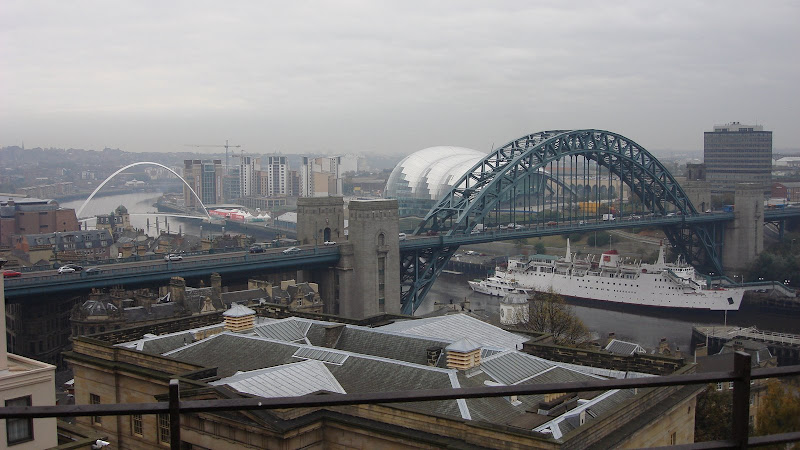
The top of the keep provided us with some great views of the city, though. Newcastle was hit hard by the post-industrial slump, since it was a manufacturing city. Now, it is starting to recover. Bridges criss-cross the River Tyne, and the city has a beautiful new music hall, as well as one unique new bridge across the Tyne that raises like an eye to let ships pass under it. Very interesting to peer at from the top of a medieval castle.

There you have it. An exhaustive (and exhausting) look at mid-semester break. We arrived back in London Thursday night thankful that we didn’t plan any more to our trip. We were exhausted.

Next weekend is our trip to Ireland, the last of our trips from England. Here’s hoping it’s as good as Edinburgh!

Monday, 15 October 2007

Slow Weekends

In order to prepare for the big trip to York, Scotland and Amsterdam that will start this Friday, I took the last two weekends slow. This helped three things: My wallet, my academics and my body. It kept me from spending too much money after the financial crisis of Sweden, gave me time to shore up for mid-terms, and let me catch up on a little sleep.
That's not to say nothing interesting happened. In order to keep you up on the latest, here is a quick rundown of the last two weekends.

10/5: Hampton Court

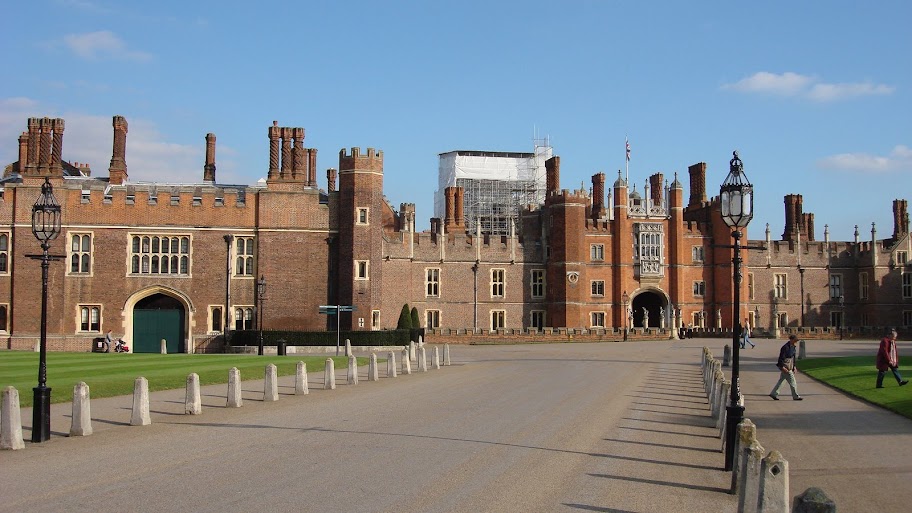
Friday two weeks ago was the date for my trip to Hampton Court for my Law Makers & Law Breakers in British History class.
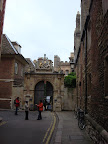
Now, if I told you that I got a free coach ride and free admittance into a palace built my Henry VIII without even having to put down the usual £10 reservation deposit, you might think it was a pretty good deal. You might think that, except for the fact that this trip was on the same weekend as the school's Istanbul trip, which, although significantly more expensive than Hampton Court, was a bargain for traveling to Turkey.

Nonetheless, I tried to shrug off my disappointment and enjoy the sights. Unfortunately, there really wasn't much worth mentioning. It was a drafty palace of relatively modest size. The most interesting point of the palace itself was the large kitchens that had to put out enough food to feed two meals to roughly 800 people daily. Aside from that, we got to take in some very old tapestries hanging on the wall, but were not allowed to photograph them.

The gardens were really the best part of this trip. They weren't particularly large, but it is always nice to see some green after trooping down Oxford Street daily.

And that was the most interesting part of the weekend, unless you count Sunday's nail-biting weekly trip to the grocery store.

10/12: Cambridge


Another Friday, another school-sponsored trip.

This time I didn't have to shrug off the blues of not being in Istanbul. Possibly as a consequence, I enjoyed this trip a lot more than Hampton Court.

That might have just been because of the delicious fish & chips I got toward the end of the trip from The Eagle Pub. The pub's ceiling is decorated in etchings from WWII airmen. Those that were stationed near Cambridge used to take cigarette lighters and burn their names or other messages into the ceiling. Those marks are still there today. In addition, when DNA was discovered in the mid-1900's, the discoverers went to the Eagle to celebrate. A note in the corner marks that, too.

Other than that, we really just walked around a quiet university town. The streets were narrow and filled with bikes, yet the cyclists didn't have a penchant for nearly clipping me, ala London. It was just nice to get out of the rat race for awhile, even if that did mean a ninety-minute bus ride.

10/13: The Tate

Saturday Deb and I headed over to the Tate Museum of Modern Art. There has been quite a fuss in the papers about a new exhibit they have that is a large crack in the floor.

Yes, a crack. The artist says it is supposed to convey the divided issues of race in a post-imperial world, or something like that. Either way, it is quite impressive. The Tate is in a big old power plant, and the crack runs the entire length of the exhibition hall. I'm no prospector, but I would guess that was at least 200 yards. You could walk right up to the crack, step over it, peer into it -- whatever you wanted. I thought it was neat.

As for the rest of the modern art ... well, some of it was nice. I found a little bit to go a long way, so we headed over to check out the nearby Borough Market.

There's nothing like a touristy market to make you feel poor. It's not that I don't want to spend £10 on a slice of fine cheese, it's just that I'd rather head to Somerfield and spend £2 on a similarly-sized hunk. Even so, it was fun to walk around and take in all the different meats, cheeses and other various goods being peddled.

And that is about all I have to say about the last two weekends. England surprisingly advanced to the finals of the Rugby world cup, which is exciting. Sadly, we'll be in Scotland when the final is played against South Africa. I'm wondering who the Scots will be rooting for.

Ramadan ended on Friday, and there was lots of celebrating on Edgeware road, which has a large Lebanese population. Nothing got out of hand, though. The biggest activity was cheering and revving your car's engine like you were in The Fast and the Furious.

The next post should be a little more exciting. It won't be about biding time and resting up. My last mid-term is Wednesday. Actually, I'd better go study for my history test. Yes, the same history class that took me to Hampton Court and kept me from Istanbul. Sometimes academics just ruin all the fun.

Thursday, 4 October 2007

Stockholm


Last Thursday, the 27th of September, was exactly one month after I left the United States for the United Kingdom. It was also the first time I left England since arriving here.

My destination was Stockholm Sweden. Now, I have to admit that I didn’t really know much about Stockholm before going there. I really booked the flight because some people I knew were going, and it was a pretty cheap flight. But for all I knew, Stockholm was a positively dreadful place to go.

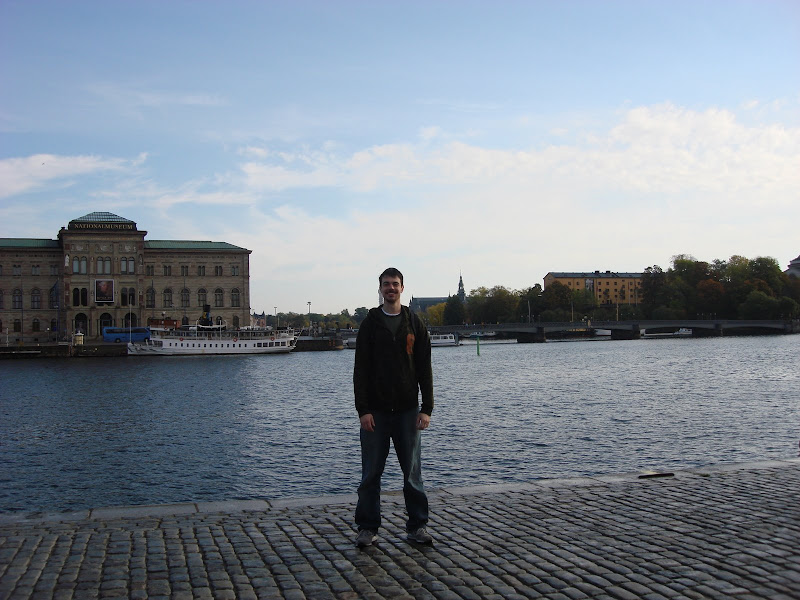
Fortunately, the city is the exact opposite of a dreadful place to go. It’s built on an archipelago, so there is plenty of water. It is made up of 14 islands that are connected by a seemingly-countless number of bridges. Whoever is in charge of city planning in Stockholm also deserves a big bonus. There are stone walkways everywhere, and plenty of trees keep the city beautiful. The architecture fits in perfectly with this veritable marina metropolis. If you haven’t looked at my pictures from the city, I suggest you head over to picasaweb.google.com/rickseltzer right now.

It’s even easy to circumnavigate the language barrier. Practically every clerk or shopkeeper we ran across spoke English in addition to Swedish, and while it was tough to read menus and some signs, I never had that helpless feeling of being isolated. If anything, the different language was a welcome reinforcement of the fact that we were actually in a foreign country.

Alas, the Swedish capital isn’t without its negatives. For one thing, it might be even more expensive than the wealth-sucking vacuum that is London. I was not expecting this, since the Dollar is actually stronger than the unit of Swedish currency, the Kronor. It’s seven times stronger than the Kronor, to be specific. Unfortunately, Swedes see fit to charge hundreds of Kronor for practically anything, be it food or entertainment. It’s a little odd too see a menu listing a price as 180. A little odd and a little painful.

Now that you understand a little more about Stockholm, lets move on to the rundown of my activities.

Thursday

We started with a simple plan. Calyn and I were supposed to take the tube to the bus stop after my class at Faraday House. Deb didn’t have class on Thursday, and our flat was relatively close to the “Easybus” stop, so she was just going to walk to the stop. After we met, we would take the 2:30 bus, on which we had booked seats, to Stansted Airport, which is about an hour and a half drive from central London. That put us in the airport at four o’clock, giving us more than enough time to catch our six o’clock plane. Simple, right?

Wrong. We got out of the tube and found the Easybus stop, which had an orange minibus idling in front of it. We had about seven minutes before the bus was scheduled to leave, and Deb was nowhere to be found.

I checked my phone and sure enough, I had a voicemail.

“Hi,” Deb’s panic-stricken voice rattled from the phone. “I don’t know how it happened, but I don’t know where I am. The bus is going to leave soon, and I’m lost.”

This was not good. Deb’s sense of direction is like my father’s fashion sense in the 1970’s: nonexistent. Even worse, the bus was set to leave. There was no way she was going to make it.

Calyn went on the bus so at least one of us would be there on time. I’m not sure what she was going to do. Maybe hold up the plane by demanding to be able to leave her tray table down on takeoff. Still, it seemed like a good idea for one of us to be able to be at the airport on time. I got the exciting task of talking Deb in to the bus stop on the phone.

Oh, did I mention that I told her to spring before I realized that she had no chance of making it before the bus left?

Anyway, a very sweaty, flustered and out-of-breath Deborah arrived seven minutes after our bus pulled out, leaving us to wait for the next bus. We had to keep our fingers crossed the entire time, because while our ticket would let us on to later busses than the one we had booked, people who had booked for that specific time got priority boarding. In other words, if enough people had booked the next bus and showed up at the stop, we would have to wait another half hour, pushing our arrival at Stansted back from an already-delayed 4:30 to a more nerve-wracking 5:00.

Fortunately, we made it on the next bus. Only one person made it on after us, but we did make it. We even made through airport security and to the correct gate in time to secure spots at the head of the priority boarding line. The only thing our little drama cost us was a bit of Deb’s breath and dignity. She regained her breath pretty quickly, but please don’t mention this story to her. She doesn’t exactly like it.

Anyway, we got great seats on the airplane because we brought only one piece of carry-on luggage and didn’t have any checked baggage. That meant we could board the plane first, and since our carrier, Ryanair, doesn’t have reserved seating, we got our selection of seats. At my urging we picked sets in the emergency exit row, since it gave me plenty of legroom. It was the only flight I’ve been on where I could stretch out and not get leg cramps.

Our arrival in Stockholm at 9:10 local time was pretty uneventful unless you count a two-hour bus ride from Skavsta airport and 10 minute walk to our youth hostel as eventful.

Even at night we could tell the city was very pretty. The bus dropped us off in the middle of Normalm, on the largest landmass of the city. Our hostel was just one island away on the “Old Town” of Gamla Stan, but we could tell the city was gorgeous when crossing the bridge. The only reason I wasn’t too excited to go to sleep that night was that I was completely exhausted from class, missing the bus, and flying to a city in a new country.

Friday

This was a day of museums and touring. After grabbing an outrageously expensive cold-cut sandwich for breakfast in a cafĂ©, (cold-cuts made up their breakfast menu) we headed over to the Vasamuseet. This museum, located on the museum and park-heavy island of Djurgarden, was at the top of my list of places to go. It houses the Vasa, a massive 17th century warship that sank in the waters of Stockholm just minutes after starting its maiden voyage. In the 1950’s, roughly 250 years after it sank, they raised the ship and restored it. Thanks to the particular makeup of the water in Stockholm, wood-boring worms don’t live in the waters there. That meant that the hull of the Vasa was in pristine condition when they raised it. The museum contained all sorts of insight into the history of the time when the boat was launched, but staring at the massive hull of that ancient boat was just stunning. Incredibly ornate carvings were preserved in pristine condition. I took a lot of pictures of this boat, but none of them quite capture its essence.

Next we dropped in on the Nordiskamuseet, just a few minutes away. There really wasn’t much there worth talking about, especially since half the exhibits were in Sweden. This was the most forgettable part of the day.

After that we took a 2 hour boat tour of the city. Going to Stockholm without going on the water would have been a sin. The city is absolutely beautiful from the water. I can’t name all the things we saw, but the biggest highlight was City Hall, where they select the Nobel Prize winner in literature. We were also on a lake that freezes over in the winter, allowing people to walk across from one island to another. I guess that makes the boat taxi business, which does exist in Stockholm, a seasonal endeavor.

Saturday

We took it a little easier on Saturday, partially because it rained all morning. At noon we went to see the changing of the guard at the Royal palace, which was just a 5 minute walk from our hostel. I should mention that stepping out the front door of the hostel left us staring out on the water, and we could easily walk up and down the street that ran up the east side of Gamla Stan.

Anyway, it was still pouring all through the changing of the guard, making it a very soggy affair. The new guard marched in with a lot of fanfare and a big band. The soldiers did a funny little sideways shuffle to pack closer together once they had marched in and turned to face each other. I don’t know why they did it, but it made them look like soggy ducks in the rain. It was also hard not to feel bad for the poor bloke who was left on duty at the end of the ceremony. The sky was really opening up on him.

For lunch we walked up to a bar and restaurant for our fist taste of Swedish Meatballs. They really are worth raving about. Check out my review at ricksfoodcritique.blogspot.com for a full understanding of the Swedish masterpiece.

I finally had to indulge my female companions’ wish to shop. We walked down the pedestrian streets of Gamla Stan, which is to say we perused more gift shops than I can remember. I got a moose-leather keychain as my souvenirs of Sweden. The moose is either the Swedish national animal, or people in Sweden just really love it. Either way, I needed a keychain, and this piece of moose-leather caught my fancy.

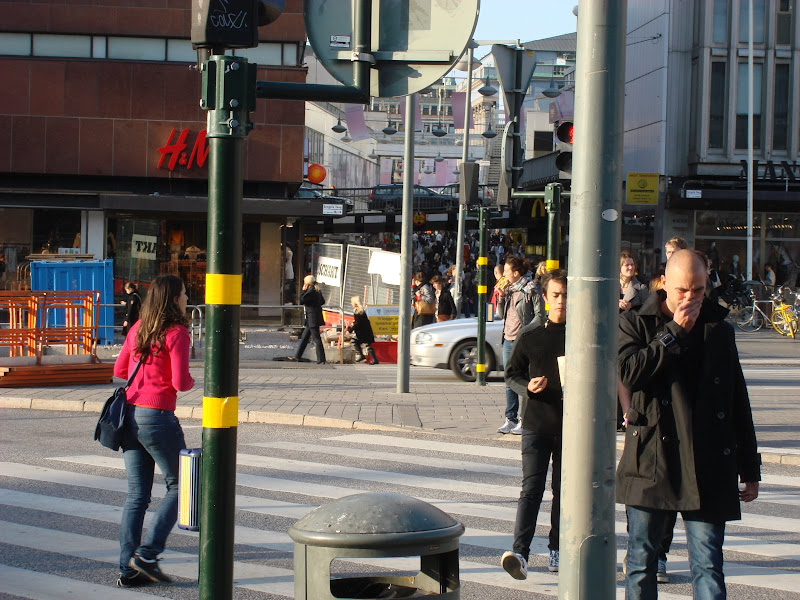
We also spent a little time in Norrmalm’s shopping district. It reminded me a little of Time Square and Oxford Street, only the spaces between the glamorous stores were giant pedestrian walks instead of car-filled streets. At any rate, we went to the great Swedish clothing chain H&M, which disappointingly was nowhere near as cheap as it is in the good old USA.

Sunday

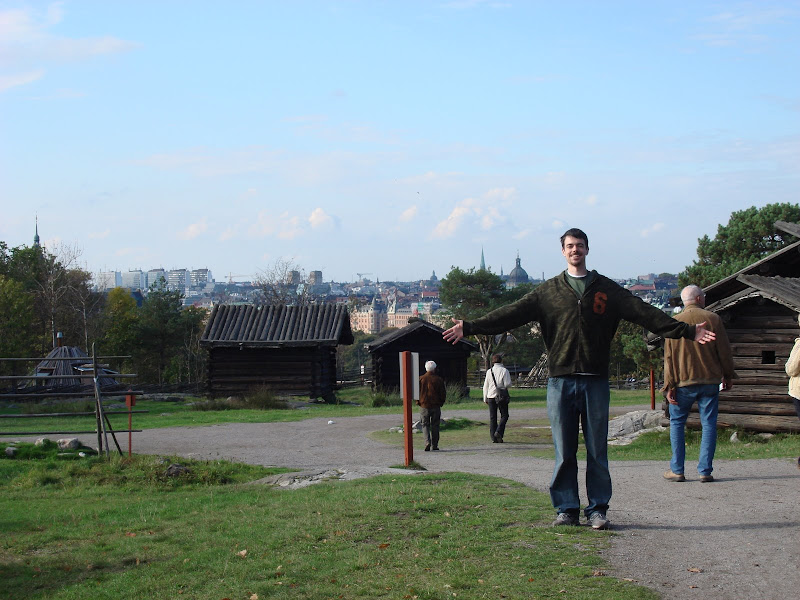
Our last day in Sweden was perhaps my favorite overall. We went to the Skansen, a giant open-air museum and zoo. One part is a collection of old buildings with actors dressed up as Swedes from the 1700s. Another is a large fairground where two separate festivals were taking place. One was the apple festival, and it included fried apples, cider and music. The other was the autumn festival. It had everything from sheep-shearing to merchants hawking their old-fashioned products. The zoo didn’t have a lot of animals, but it did have some interesting ones. In addition to goats, cows, and wolves, there were penguins, bears and the Swedish moose. I even got to pet a mother moose!

I think we spent about six hours at the Skansen before walking back to the bus stop to take our leave. Along the way we ran into some Native American singers on the street. I have now been to two capital cities in Europe: London and Stockholm. I have now seen Native American performers in both. They seem very out of place.

We had some bus fun on the way home, too. We had bought return tickets to the airport on Thursday to save money, and arrived at Central Station secure in the knowledge that busses ran regularly to the airport. The only problem was that there is a 2 and a half hour gap in Sunday afternoon busses between 4 and 6:30. We got to the bus station around 4:15. That turned into a lot of waiting at the bus station, and it made us arrive at the airport only 75 minutes before our flight. Skavsta is a pretty small airport, (Smaller than Harrisburg International Airport, in fact) though, and the entire bus was filled with people who were taking our flight. I doubt we were in any danger of missing it.

So there you have it, 2,000 words on our trip to lovely Stockholm. Maybe now you can understand why I say it is an overlooked gem of a destination.

Sunday, 23 September 2007

Steaking out Salisbury and Stonehenge

Friday was my first trip out of London since I arrived, and it was a combination of a visit to the infamous Stonehenge and the nearby city of Salisbury.

Since I’m not eating red meat here I didn’t bother to check whether or not Salisbury has a steak named after it. Instead, we spent some time in a Cathedral and old church. More architecture, just in case you weren’t bored by all the pictures of buildings from last week’s “Open House London” tour. First, though, was our trip to Stonehenge.

Getting out of the city on our minibus was a fabulously fresh experience. There was already one school trip to Stonehenge and Salisbury, but it was full before I had a chance to sign up. That meant I went on this trip, and it also meant that this trip was not very crowded. Between the open fields on either side of the bus taking the place of five story buildings and the open seats on the bus taking the place of sullen-looking passengers on the tube, it was a great change of pace.

Stonehenge itself was a nice set of rocks that have been standing on a windy hill for thousands of years. The oldest feature, the ditch around it, was dug something like 5,000 years ago. The juvenile stones, by contrast, range between 4,500 and 3,500 years old, if my memory serves.

I’ve heard rumors that Stonehenge is always cloudy and windy, and my visit doesn’t offer any evidence to the contrary. There was a gray curtain of clouds blowing overhead, and the temperature was at least 10 degrees (Fahrenheit) colder than it was in London. The sun didn’t peek through the clouds, it peeked through thinner layers of clouds, offering lighter shades of gray. Someone on the bus said Stonehenge was a lot like the pictured Scotland, and they were right.

After we walked around the rocks, which are most impressive when you consider their historic context, it was time to board the bus and head to Salisbury.

The weather didn’t warm up much, although the wind stopped, and the clouds didn’t break either. Salisbury is notable most for its enormous and old cathedral, which was finished in the mid-1200’s. It’s right next to the river, and there is only a four-foot foundation of stones above the water table. They also added the cathedral’s gargantuan steeple years after the rest of the building was finished, when it was decided the original design was not impressive enough.

So you have a Cathedral sitting on just four feet of gravel and a sky-scraping steeple that was not part of the original architecture. See a chance for disaster? If you stand in the middle of the church and look up the pillars that support the steeple, you can see where they started to bow as the steeple started to tip. Some emergency bracings were put in place, and they managed to stabilize the steeple. They still have to monitor the wind speed though, in case it tries to blow over on them.

The inside of the cathedral is just as massive as the outside. They also did restorations that removed the “compartmentalized” fashion that marks most old cathedrals. That means you can stare down the whole length of the cathedral, and I liked this place a lot more than Westminster Abbey. Somehow, the abbey seemed claustrophobic, but Salisbury Cathedral feels like you could play a baseball game in it and still have space for a church service.

We had a tour guide who showed us a few interesting things such as the oldest working mechanical clock in England (and maybe Europe, though they have to way to prove it) and spots around the cathedral where bored carvers put pagan symbols such as the “Green Men” of fertility in the woodwork.

The end of the cathedral tour was probably the best part, because we got to see an extremely important document. There are only four original copies of the Magna Carta in existence today, and one of them happens to be housed in the Salisbury Cathedral. That one is apparently also the one in the best shape.

Right now you can get quite close to it – the document is essentially taped right under a piece of glass and I’m sure the janitorial staff had to wipe my nose prints from the glass that night. It’s also in pretty good shape for being about 800 years old. In fact, it would be quite legible if not for the fact that it’s written in Latin. Even so, it’s quite a way to top off the tour of that massive building.

Before we went in Salisbury Cathedral, we walked through the town and also toured St. Thomas Church. St. Thomas is almost as old as the Cathedral, and it has a majestic painting of the end of the world, with the Saints rising from their graves and the devil taking the condemned. Apparantly it was whitewashed during restorations, before it was rediscovered during later restorations. That seems to be a theme in English churches, as it’s happened to every place of religious significance I’ve visited so far: Westminster Abbey, Salisbury Cathedral and St. Thomas.

That’s about it. The drive back was uneventful except for the fact that we were reintroduced to London traffic in a 40-minute crawl back to Faraday House. Our bus bumped a cab, whose driver then got out and yelled at our driver. That was interesting, but there was no damage to either vehicle and all it really resulted in was another cab behind us getting angry and laying on his horn for awhile.

I’m not sure what made me enjoy the trip more: the fact that we got out of crowded London and stood in a field for awhile, or the fact that we saw some big historical sights.
Posted by Picasa

Monday, 17 September 2007

A Packed Weekend


My troubles with BT continue, so you get another megapost. Actually, saying that I have troubles with BT is like saying I have troubles with SU football coach Greg Robinson. Despite my every effort to the contrary, I doubt he even knows I exist. Regardless, I wrote these posts over a couple of days, but they are all separated by the proper dates. Enjoy!

9/14/07

Today was the school tour of the Tower of London. At least, that’s what I thought it was when I signed up for it. After I got there, it turned out that it was a tour of the Tower of London and Westminster Abbey!

Now, admission into the Tower of London alone is quite expensive, and I was saving a pretty penny by letting Syracuse University London pick up my tab. But admission to Westminster Abbey has also been known to drain the wallet. So it was almost like I hit the jackpot when I found out I was getting twice the fun for the same refundable £5 deposit.

Norman Reuter, who typically runs an architecture course at SUL, was our tour guide. He’s taking the semester off from teaching, but he sure has thrown himself into his continued involvement at the school. Our group met at 10:30 a.m. at the Tower Hill Tube stop, and we didn’t finish up until around 4:30 in the afternoon. We did spend some time waiting for students who showed up late and we had a break in the middle of the tour, but there was still a lot of information to take in over a relatively short time.

The Tower of London

The Tower of London is not as tall or as compact as you might expect from popular perception. Although we didn’t go to the highest points, it seems to sit a great deal lower then you’d expect. This is in part because the grass around the outer wall is eight feet higher than the water level of the moat used to be. It is also because the tower was built when buildings were a lot shorter – five or six stories meant a lot more hundreds of years ago.

Even so, the tower is quite impressive. It’s a hodgepodge of different fortifications and towers built at different times over several hundred years. At the center is the large cube that is the “White Tower.” Interestingly enough, the entrance to the White Tower is on the second story and has only been accessible through a wooden staircase. That is so you can burn the staircase to further fortify your position if need be. At the bottom, the stone walls are something like 14 feet thick.

Another interesting thing about the Tower of London in general is that something like 200 people still live there. The Governor of the Tower of London is a position of prestige, and prisoners were held in the same tower that makes up the back part of his house. The last prisoner to be held in the Tower of London was Adolph Hitler’s secretary during World War II. He was held there throughout the war until he faced trial for war crimes.

A final interesting fact about the tower: Ravens are kept there by royal decree. It has to do with a great fire that burned the West End of London but spared the east and the Tower of London. Ravens, flew into the tower to avoid the fire, and the King (I honestly don’t remember which one) declared that ravens should always be in the tower, the thought being that as long as ravens were there a member of the royal family would still be in power.

Finally, what we saw of the Bloody Tower was pretty disappointing. They had one example of a torture rack and two other torture devices, but we didn’t find any elaborate walk through the infamously named tower.

We also saw the Crown Jewels, since they keep them in the Tower of London. It might have just been the way the splashed light on the jewels, but they sparkled more than any gems I’ve seen. They were quite nice, though I’d imagine they were quite heavy to wear at your coronation.

Overall, the tower was fun, and I’m glad I saw it. (Especially considering I only had to pay Tube fare.) It still didn’t live up to it’s portrayal in the infamous Goosebumps book, “A night in Terror Tower.”

Westminster Abbey

After we saw the Crown Jewels that kings or queens wear during coronations, we got to see the place where they kings or queens get coroneted.

First we got an hour to eat lunch. I managed to find a little shot selling fish & chips with a can of soda for just £2.50! Five bucks might seem like a lot for fish & chips, but by London standards, that is like getting a three-course meal for free. Even better, the food was pretty good. I expected the fish to be dry and the chips to be cold, but both were hot and juicy. The only real complaint I had was that the mayonnaise was a bit sweet, but I just added a little more vinegar to fix the problem.

One lunch was finished, we popped onto the tube and into Westminster Abbey. Unfortunately we were only allowed to use cameras in the cloisters and not the inside of the abbey.

This is where we started to hear a lot about architecture from our guide. I won’t go into all the details, but we did see a majestic room called the “Chapter House” which is where the House of Commons was born.

Inside the actual abbey, we saw the burial sites of many illustrious people. Rudyard Kipling, Charles Dickens, several kings and queens, Isaac Newton and, perhaps most interestingly, Charles Darwin were buried there.

They abbey was quite impressive, although the attendants, who wear red cloaks over their suits, were a bit gruff. I didn’t have to deal with them personally, but they seemed to be a bit condescending and sometimes downright rude. I guess you can do that when you have a limitless number of tourists paying to see your Abbey.

Arching ceilings, beautiful decorations, a cross-shaped design: you know the drill with cathedrals and abbeys. I would share more with you, but you really need to see pictures of the interior to understand how nice it is. Use Google to find some, since the attendants and their red cloaks looked ready to smash my camera if I took it out of my pocket.

All of this translates into a very tiring day. Tomorrow I plan to show up at the “Open House” tour of Parliament in hope that someone who signed up won’t show up and I can take their spot. I’ll let you know how that goes.

9/15/07
Open House London

Early to bed and early to rise might make a man healthy and wise, but it is also a fact of life on Stourcliffe Street on Saturday. Apparently Saturday is rubbish day here, because this is the second week in a row I’ve been jostled awake by the sound of crashing and the burning clutch of a garbage truck.

That was alright by me, though, because I had to head over to Russell Square to meet yesterday’s guide, Norman Reuters, in hopes that I could tag along on the “open house” tour. As you no doubt know from your careful reading of yesterday’s writing, this was an architectural tour that was advertised as including a walk through the houses of Parliament – something that you can’t always do.

Long story short, I did get to go on the tour, but the Houses of Parliament weren’t open until Sunday. Deb and I plan to try to get in tomorrow. In the mean time, we got to go around London with a well-informed (and entertaining) guide on London’s Open House weekend – a weekend when buildings of high profile open their doors to the public.

We started off with a few places that I won’t bother describing. I have some pictures of the more interesting ones, so head over to my photo album to check those out. The highlights include a quite impressive sculpture and the fifth-most prestigious university in England.

After about an hour’s tour, we tried to take the #24 bus from the University of London to Parliament. The only trouble was that the #24 bus didn’t come, didn’t come, and didn’t come. Eventually we got on another bus with the intention of changing buses at Trafalgar Square. As we drove off on the bendy bus, we saw the double-decker #24 bus pull in behind us.

This was distressing for a few reasons. First, I haven’t been on a double-decker yet, and I would rather like to ride one. Second, we waited a long time for the bus, and now we were going to have to pay double the fare to take two buses where before we could have only taken one.

Alas, neither of these problems ended up being a real thorn in my side. The bus driver got on the loudspeaker and told the packed bus that there were severe delays due to heavy traffic from the open house events, so we would probably do better to walk. This is after we paid £1 for a ride of about 4 blocks.

Well, we got off and walked anyway. A girl convinced Mr. Reuters that we should just walk, and that proved to be both a blessing and a curse. That man moves. We all had a good deal of trouble keeping up with him, but we did get to see a few sights that weren’t advertised on the tour, including the market at Covent Garden and the Royal Opera House. I’d actually seen most of the sights before, but our guide gave me some new insights into their history and architectural foundation.

Then we walked by Downing Street, where security didn’t allow us to get anywhere near Number 10 and popped into the Foreign and Commonwealth Office, which is the equivalent of the U.S. Department of State. After walking through there, I want to be a diplomat. “Lavish” and “posh” don’t even begin to describe that building.

We also managed to sneak to a window where we caught a glimpse of Number 10. Mr. Reuters tipped us off that we could see if through a certain window. The only problem was that there was a large display and strategically placed table blocking people from the window. We went by it anyway, hoping to catch a glimpse of the Prime Minister’s residence. Margaret Thatcher had, after all, just been there for tea with Gordon Brown this week! Just as we started looking at it, one of the attendants ushered us off, claiming there were snipers that wouldn’t like it if we started rustling the curtains. I have a feeling they told our guide that, too, but he told us to go have a look for ourselves.

Eventually we reached parliament to find it closed. This crushing blow was alleviated slightly by the fact that we were able to get in to the Portcullis House, where many members of Parliament have their offices. It’s quite a depressing black metal structure from the outside, but it is also very modern and nice inside. Sadly, we couldn’t take pictures inside for security reasons, so you’ll just have to ask me if you want to hear more about what it was like.

After that it was time to take the Tube over to the Lloyds Insurance building. It seems Lloyd’s grows so fast these days that they needed four new buildings in a span of 100 years, so they commissioned their architect to give them some flexibility for their new building, which was completed in 1986. It is fifteen floors, but Lloyds only uses four. They lease out the remaining floors right now, but plan to just move upwards as their needs expand. If the necessity arises, the building has also been designed so that they can actually build more floors on top.

The style of the building itself is very interesting. From the outside, it reminded me of a skeleton and muscles – just the important parts of the buildings. All the elevators were visible outside, as were the staircases. It was quite interesting. I would definitely recommend looking at the pictures of this one.

The tour finished up in St. Stephen’s Walbrook church, which was rebuilt in the late 1600s after the Great London Fire. It reminds me a lot of Howard Roarke’s church in The Fountainhead, although the parts that reminded me of that weren’t originally part of the design. Pews circle the altar, which is a piece of modern art created by an agnostic sculptor. There is no stained glass, so light comes in and makes the whole church seem very bright and welcoming. The design of the church is square, but it has a large dome, and the pillars supporting the dome make the shape of a cross on the floor plan.

Out guide explained that these design elements all mean something. The dome represents heaven, the square earth, and the cross, of course, represents Christianity. Pretty fancy, really.

All this added up to a pretty tiring day. It looks like we’ll be headed to the Thames Festival tomorrow, making for what should be a busy day. Tonight is for grocery shopping and sleep.

9/16/07
Parliament and the Thames Festival

There were two more exiting activities this weekend: Parliament’s open house and a visit to the Thames Festival, which is held at the end of summer. If you’ve stuck with the rest of this weekend’s blog post, you’ve got to be tired by now, so I’ll make this bit quick.

Since we were turned away from the doors of Parliament yesterday after learning that it was open Sunday afternoon instead of Saturday afternoon, Deb and I decided to hike right back down there and enjoy a free glimpse at the famous building.

And we did get in. There was quite a line, but it moved quickly, and after a trip through a metal detector and a pat-down from a security guard, we were walking into the oldest part of Parliament.

They didn’t actually open the chambers of the House of Lords or House of Commons, but the good people running the show were quick to inform us that for £12 we could come back during the next two weeks and get a guided tour that included those areas. That’s almost tempting, but I’m pretty sure we’ll have to be satisfied with the free tour of Westminster Hall, which is the oldest part of the building.

The literature says it is over 900 years old, and although it’s pretty dark and empty, it’s still impressive. Huge doesn’t even begin to describe the place, and there is no doubt that it’s old.

We also got to visit the Parliament gift shop, which had such exciting items as House of Commons or House of Lords key chains for £4.15 and House of Lords Scotch for £28. And while I was tempted to put down £3 for House of Commons Orange Marmalade with Champaign, I decided to save my money in order to try the food at the Thames Festival.

It was a good move. The festival was filled with lots of craft vendors and even more performers begging for a little change. There were singers, mimes, a girl who rolled glass orbs around on her arms, and even break dancers. A lot of people would stand or sit stone still and pretend to be statues or motionless machines. Whenever someone put a coin in their cap or tin receptacle, they would perform for a few minutes, as if they were a machine. There were at least 15 people who did this.

The festival stretched along the south bank of the Thames and was quite crowded. We had to wait awhile for food, but eventually secured some. I picked up a coconut with the top loped off to drink, and had some Creole fish patties to eat. I had never seen fish patties in the states, so I didn’t feel as if I was sticking to my American culture by eating them. Besides, they were delicious and relatively cheap.

A bit later we moved to the north bank to watch the parade, which was about 2 hours long and mostly filled with dancers, and then we took in the fireworks. They shot them off from boats in the Thames, and it was quite an impressive display.

And that concluded a packed weekend. I’m glad I can go to class tomorrow to get some rest. I don’t know, I might need it. Next Friday is the Stonehenge trip.
Posted by Picasa

Monday, 10 September 2007

Catching Up

A combination of jet lag, a lack of an easily accessible internet connection, the need find housing and a dose of homework has prevented me from starting my planned travel blog until now. That means that there is a lot of ground to cover. Rather than go into the detail which will no doubt be a trademark of later blog entries, I will dedicate a paragraph or so to the high points of the trip in order to catch up quickly.

If you want to hear about the flight, head over to ricksfoodcritique.blogspot.com and read the entry about the food on the plane. That covers all the important parts of soaring above the Atlantic.

Below are the last two weeks in a nutshell.

August 28
Arrival and the Eye


We touched down in Heathrow after a relatively uneventful flight. My legs were screaming at me and I was ready to get off the plane right away, but whoever was manning the spot of air traffic controller had other ideas. The cramp in my quad and sharp pain in my knee were just going to have to get worse while we sat and waited to depart for over 30 minutes. Just before we were allowed to stand up, our captain informed us that they had some trouble attaching the tunnel to the side of the plane. Fortunately they managed to get it straightened out before we had take a page out of disaster movies and use the inflatable “emergency slide” to evacuate.

I said a few quick prayers for the eventual return of blood flow to my legs while limping to customs and the luggage pickup. Thankfully we got to do some more waiting at these two spots. I hadn’t had enough yet.

Next it was time for our Syracuse guides to direct us to the truck that was taking our luggage and the coach busses. Deb and I missed the cut off for the first coach bus and had to wait for the second – keeping with the theme of the trip.

Once we got on the bus, it was a bit of a ride into London. I would guess how long it was, but I really have no idea. Someone in charge was talking over the bus’s public address system and pointing out all the sights and history we were passing, but I couldn’t stay awake. The fact that I had not slept caught up to me right after we passed Madam Toussaud’s Wax Museum. I woke up just as we were pulling in to the hotel. I would grow to curse that sleep, because it had be completely disoriented for the rest of the day. I didn’t know North from South, and to be honest I’m still not sure where Heathrow is in relation to the city.

The hotel room was the smallest I have ever seen. The two beds were facing opposite directions in opposite corners, and if they had been a foot closer their feet would have touched. The bathroom was equally small, with the exception of the bathtub where I soon took the best shower of my life. I didn’t even realize how terrible I felt until that shower cleansed me and made me feel better.

We didn’t have any structured time for about 90 minutes after I was done my shower, and I wanted nothing more than to take a nap. Unfortunately, I didn’t want to do anything to jeopardize what was going to be a wonderful night’s sleep, and I didn’t want to delay getting on London time. I had no idea what time it was anyway, so I made the smart decision to try to find Faraday House, where Syracuse University London is located.

Armed with a map and no firm knowledge of my surroundings, I managed to find Faraday House about 45 minutes later. That’s 45 minutes later when the walk should take a total of five minutes. But I managed to not get lost and not get hit by any cars, which is a real victory.

Later that night SU sent us down to the “London Eye” or the Millennium Wheel. It is one of the biggest Ferris Wheels in the world, or something like that. Again, I was too tired to remember the information they told us. The cars were huge, and the view was incredible. Our car didn’t even have to be at the top before we could see the sprawl of London stretching out for what seemed like miles. Hopefully, I’ll have the photos posted on a photo blog soon.

Bedtime that night was absolutely divine.

August 30
Flat Finding

By our third day in London it was time to find a more permanent residence than the one Imperial Hotels was providing. The University gave us a list of recommended Landlords and it was time to dial our cell phones and start looking at flats.

Unfortunately, that was easier said than done. Some overzealous groups had found flats they day before, when we were doing silly things like getting our cell phones to work, figuring out how to navigate the city and attending the Beard Team USA rally in Trafalgar Square. (Wait until I get the pictures from that posted!) Add their tendency to snatch up living space to the fact that we had five people looking for residence – an odd number – and we were in a difficult position.

The morning wielded nothing and I was getting a bit frustrated at lunchtime. Fortunately, Lady Luck did not completely abandon us.

We were scheduled to meet a landlord at the HSBC on Edgeware Road to look at a flat. We met a landlord at the HSBC on Edgeware Road and he showed us the flat he was offering. It was quite nice, and we were beginning to talk about prices and terms of lease.

Then, the landlord we were scheduled to meet called us, and the group that was scheduled to meet the landlord to who we were talking called him.

Essentially we ended up stealing another group of SU student’s landlord and leasing the flat he meant to show them. It’s affordable, it is close to the Tube Stop and Hyde Park, and we are close to Oxford Street and the incomparable Edgeware Road. Apparently it has the highest population of Lebanese-born individuals living in London. It makes for a street of great smelling food and interesting sights. All’s well that ends well, I suppose.

September 2
Greenwich


The day before classes start is the perfect day for a university-sponsored bus tour of London and free time in Greenwich. Actually, any day is a perfect day for a university-sponsored bus tour of London and free time in Greenwich.

I got some great pictures from the bus tour and gained a better understanding of London’s layout. The Mayor’s office, Tower Bridge, the financial district, the surprisingly disappointing London Bridge and the Tower of London were all on the bus’s route.

Greenwich though was lots of fun. We took a walking tunnel under the Thames and came up near the Royal Observatory and the National Maritime Museum.

The Royal Observatory was noteworthy in particular. That’s where the Prime Meridian is based, and there were lots of people lined up to stand on either side of a silver strip that marked the famous line in front of the observatory.

Ironically, you could stand on either side of the meridian over the same silver line inside the observatory, and without waiting in line. I didn’t bother to stand in line or take my picture on either side of the Meridian, but it was still fun to be there. Now I feel like more of a world traveler – I’ve been in the Western Hemisphere.